

By Emily Wright | From the November/December 2025 issue of Strings
Alton, Illinois, is tucked into a bend of the Mississippi River, about as far from Chicago as you can get without actually leaving the Land of Lincoln. It’s a border town belonging to the St. Louis, Missouri, metro area, and it has a fascinating history. The seventh and last of the Lincoln-Douglas debates took place in Alton, at a time when burgeoning transportation and communication technology made attending and reading about the speeches contemporaneously a possibility.
Advertisement
Robert Wadlow, still on record as the world’s tallest person, was born there in 1918. It carries a reputation as one of the most haunted places in the country (for a variety of reasons), and folks do a brisk trade in ghost tours during the fall and winter months. In 1993, the area was decimated by one of the worst floods in United States history, which would have been bad enough on its own, but was famously made much worse by one man’s desire to have a good time.
Accounts vary, but the prevailing narrative suggests that as the floodwaters began to rise, James Scott wanted to party into the night. His wife did not. Court records state that Scott removed a number of sandbags around levees, hoping to strand his wife on the other side of the river. The flooding was already a fait accompli, but there is no doubt Scott’s actions made things much worse. The Mississippi spilled its banks and flowed, unchallenged by levees, over thousands of square miles. Some locations remained submerged for 200 days, and 50 people were lost. Scott’s wife unsurprisingly filed for divorce. After billions in repair and numerous efforts to revitalize the historic districts along both sides of the river, the area now gleams with a combination of Midwestern charm and a sense of possibility. It is in this hopeful context that luthier Christopher Jacoby and his wife, Britt, have staked their claim.
Christopher Jacoby got his start in Cincinnati before moving to the San Francisco Bay Area, busking and playing with bands as a violinist. As is the case with many who end up as music professionals, there was a period spent doing just about anything adjacent to art to pay the bills, from Shakespeare dinner theater to working at a bookstore, all while establishing himself as a regular on the club scene in surrounding Marin and Sonoma counties. There came a time when he was trying to work on his grandfather’s Heberlein violin, and something just felt right. “I was looking for something to pour my art into, and I caught the bug for lutherie working on that instrument,” he says. After that, he tried his hand at repairing another violin, learned to sharpen some tools, and did some web searching to see what the next step looked like.
Advertisement
That step was the Violin Making School of America, located a few states over in Salt Lake City, where Jacoby enrolled in 2003. The Oberlin Violin Makers Workshop(s) came next, the invitational gatherings that summon some of the finest luthiers from around the world to share their ideas and approach to violin making. This all sounds very natural, but until relatively recently, these lessons would have been considered trade secrets, subject to embargoes and NDAs. At Oberlin, students got together to make “bench copies” of Strads, Montagnanas, Guadagninis—with the great instruments right there on the bench to measure and scrutinize. Jacoby is grateful for the cultural shift. “The dissolution of the old guard’s desire to hold secrets close in favor of community and shared resources has led to this vibrant change in the state of modern violin making. I had opportunities to travel and build instruments under my luthier heroes in Europe and New England through the Oberlin workshops, and I expanded my palate and understanding of the great old instruments in the process.”
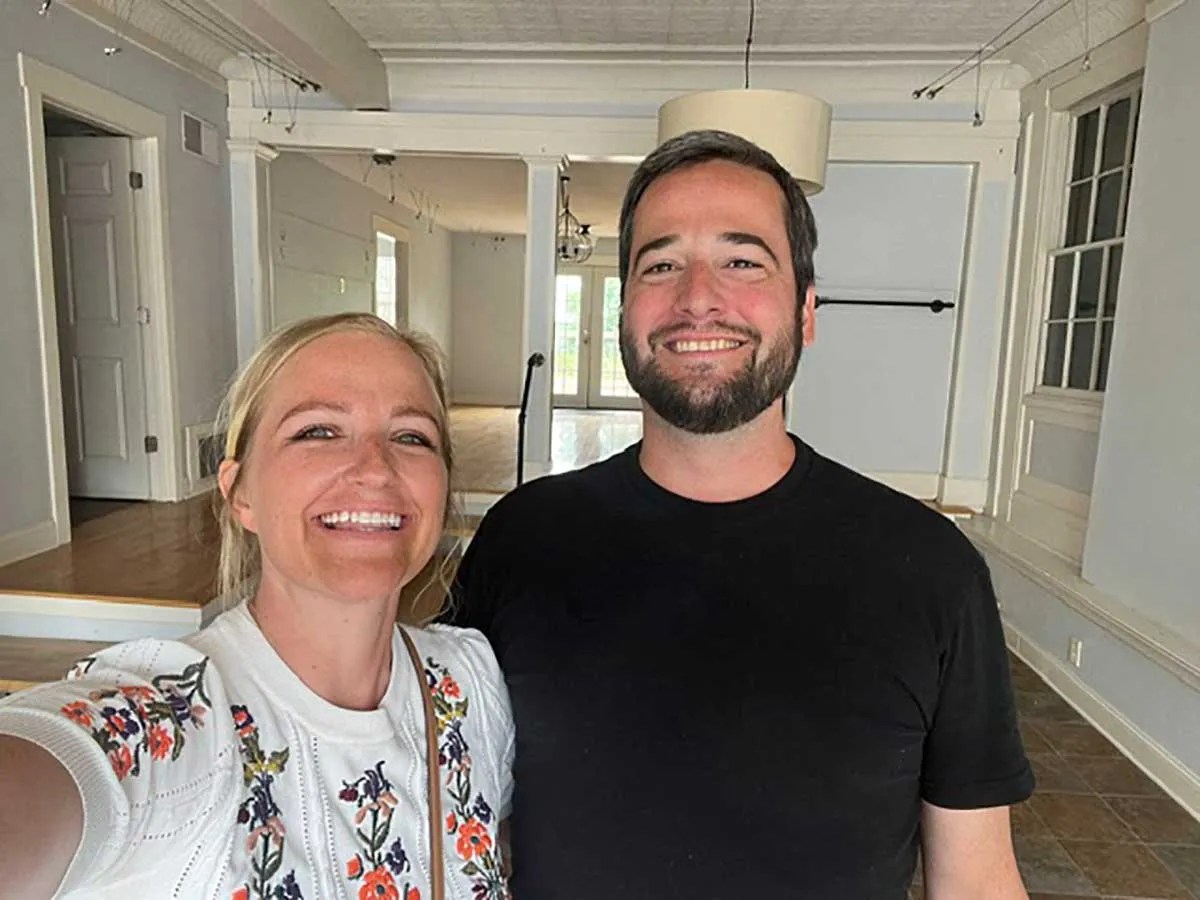
After years spent in Washington, DC, the couple knew they wanted to get back to the Midwest, and Britt’s roots in the region made Alton a natural choice. Christopher had spent years training apprentice luthiers and managing the violin and bow workshop at Potter Violins. He was ready to take on the myriad responsibilities that come with owning a shop. “I wanted a place that reflected my style and philosophy,” he says. “A shop where my kids run through on their way to the park, and folks can bring their dogs to say hello while I swap their winter bridge out on their cello.” The area also has a robust classical music presence, with the important elements already in place to sustain it: Schools have string programs, there are several conservatories and multiple professional orchestras nearby, and St. Louis is a quick commute across the river.
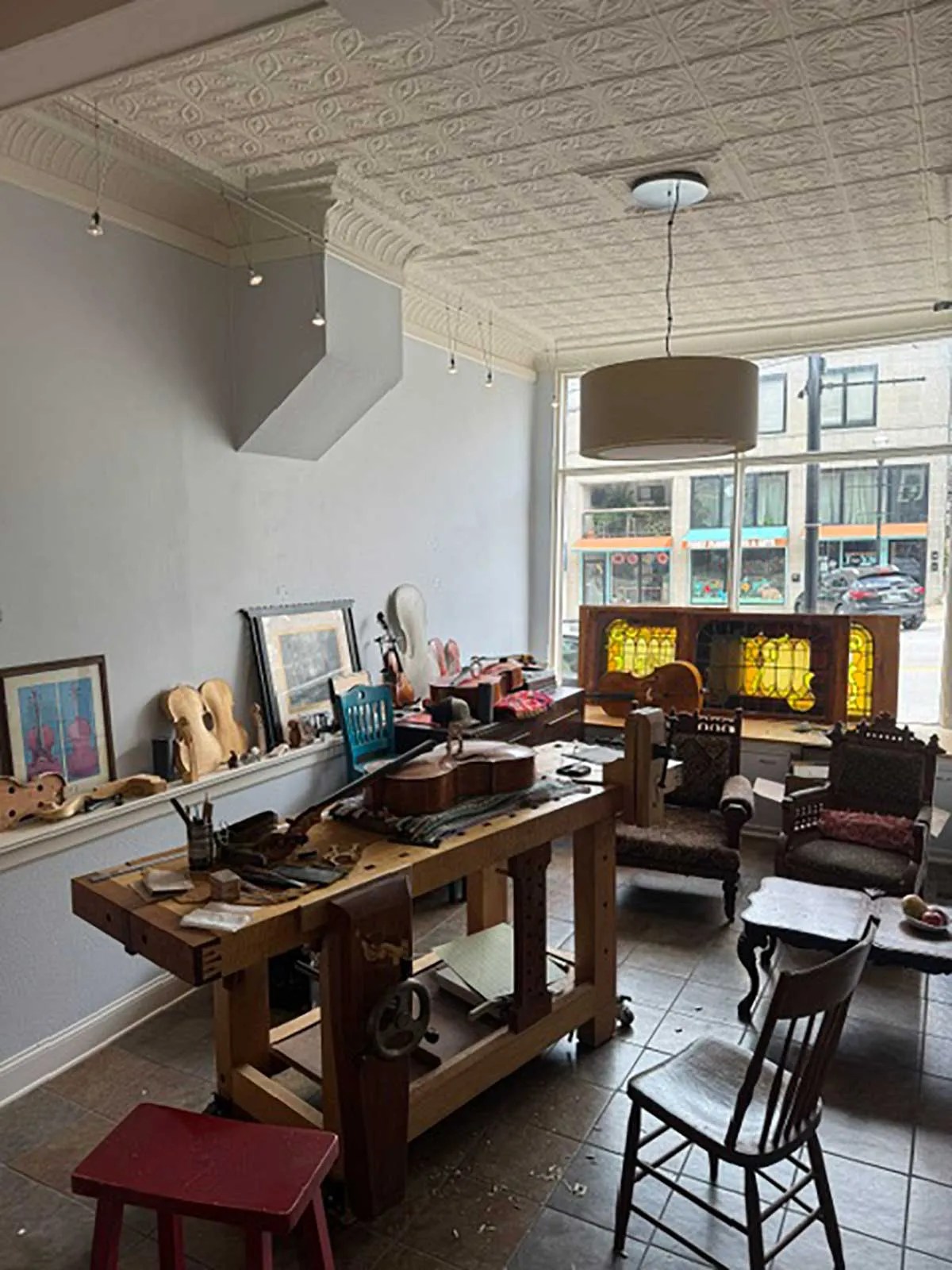
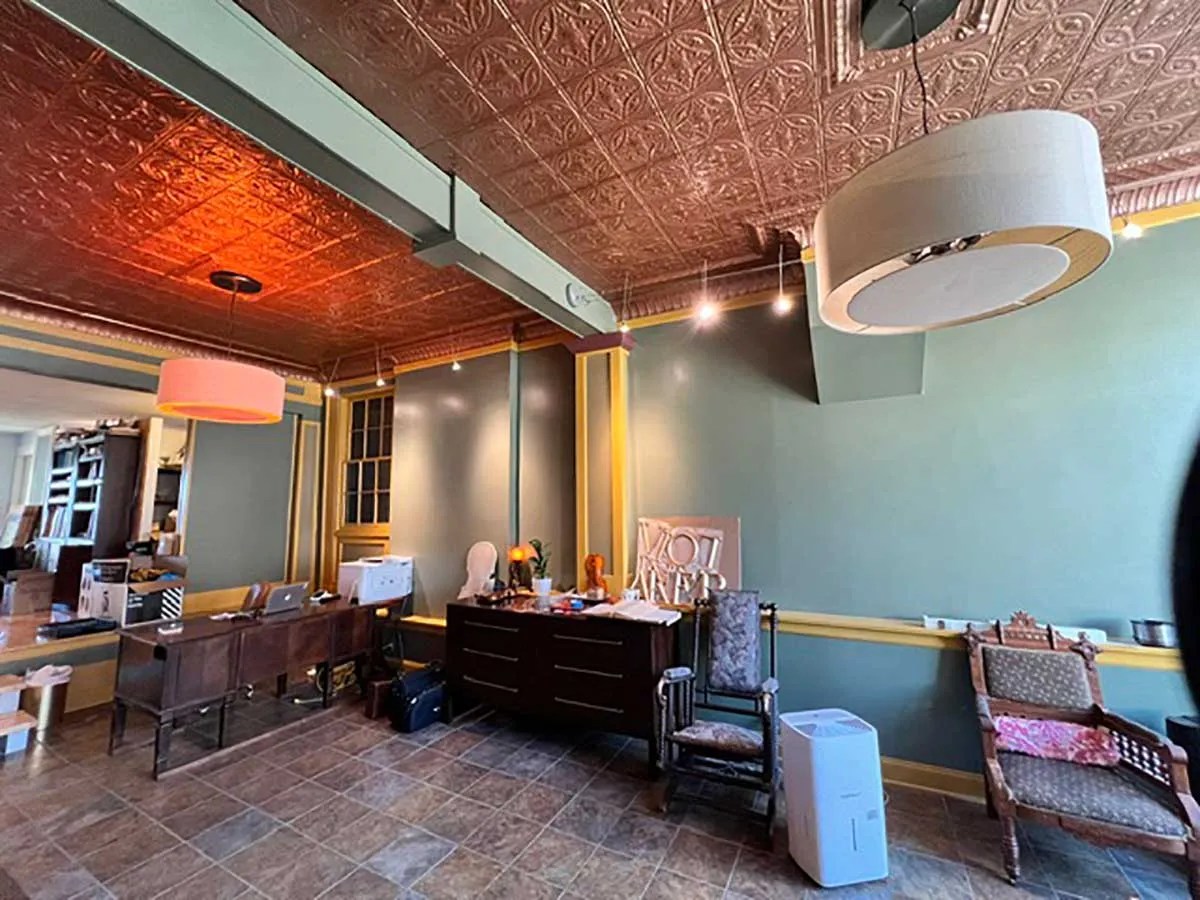
I speak to Jacoby during a frenetic phase, as the shop is still taking shape. While the showroom is getting its first lashings of paint, he muses about the wild instability of repurposing a historic building. “It seems like the workshop and sales floor get rearranged twice a week! My wife makes everything happen, from finding the building to showing violas to clients while I’m out of town completing some bow training. With this move, two of our kids (ages 13 and 20) are coming back into the orbit of dad’s work, learning basic maintenance and respect for hand tools. I’ll wait to see what they want to dive into, and will gratefully include them in the work.”
Advertisement
Jacoby Fine Violins is technically open at the time of writing; Jacoby started seeing clients the instant there was a place to install a workbench and stash his tools. By the time you read these words, the façade will be fully renovated, display cases stocked, and rental instruments prepared according to Jacoby’s exacting standards. “I want my rentals to be set up well, not just survive a child!” He laughs.
Having his name on the shingle imbues his decisions with responsibility, but there are benefits too. “In the long term, I look forward to getting back to building my own instruments and to becoming friends with the fine musicians I’m meeting here.” Jacoby has already had clients from across the country make the trip to get work done, a testament to the trust built over years of careful repairs, adjustments, and advice.
Advertisement
Some of the work Jacoby is proudest of comes from collaborations with players and other craftspeople, like a cello commissioned by Juliana Soltis with a fox head scroll, or a petite viola Paul Jasper decorated with acanthus and thistle details hand burned into the wood, a technique with the most satisfying name: xylopyrography.
Jacoby is proud to have a laundry list of professionals reliant on his skill to keep their instruments functioning, and he enjoys the gamut of requirements they bring to his bench, from the delicacy required in an opera pit to the plugged-in projection of touring rock musicians. He also gets calls after the auction hammer has fallen. “One of my great joys is when someone gets an ‘important’ instrument at auction and then discovers that its inherent value doesn’t make it the fiddle they need onstage. Restoration and setup directed at making their life as a musician rich and rewarding makes it all worthwhile.”
Jacoby has no dreams of empire. No multiple locations or domination of the violin world. At heart, what led the Jacobys to Alton was a desire to embody a people-first set of values, structuring their work around the kind of life the family wants to lead and the people who trust him with their instruments. Says Jacoby, “I want to drink good coffee and have my kids in the woodchips with me and watch the sun come up over the river. I want to sit and know how lucky I am that violin making found me, that it fulfills me.”
Advertisement


