

By Cliff Hall | From the November/December 2024 issue of Strings
In the early years of the 1900s, Carl Flesch (1873–1944) took great issue with how the violin was being taught in Germany. “Technical foundations were a secondary consideration in German violin playing during the latter half of the 19th century: the spirit was left to dominate over the fragile matter, the artistic intention was regarded as the main thing, and the result in sound as unimportant,” wrote Flesch in his 1957 book The Memoirs of Carl Flesch. “It was only when I settled in Berlin that, as a teacher, I realized with horror how many violinistic ruins this epoch had left behind as testimony to its inadequacy.”
Advertisement
Flesch had a specific man in mind upon whom he focused his frustration.
“Joseph Joachim, the interpreter of genius and mediocre teacher, was chiefly to blame for this state of affairs. While the Hochschule students were urged to be present at Joachim’s public quartet rehearsals, they were virtually left unsupervised in their own studies,’” wrote Flesch. “The term ‘technician’ was regarded as dishonorable, the artistic intention as the only thing that mattered, even when they found outward expression in scraping noises. Hence the search for the philosopher’s stone as ersatz for the absent solid craftsmanship.” Thus, the inspiration for Flesch’s influential method, The Art of Violin Playing—the first volume of which was published in 1924—was revealed.

Born in the Hungarian town of what is now called Mosonmagyaróvár, Flesch began his violin studies at the age of seven, graduated from the Paris Conservatory in 1896, and spent the following decade performing and teaching in Bucharest, Berlin, and Amsterdam.
After the Great War, Flesch (who was living in Germany) was nearing bankruptcy due to the severe devaluation of the German mark. To keep his financial house in order, he threw himself into concertizing, teaching, and spending sometimes up to ten hours a day on his book, as he was “driven by an irresistible inner impulse.” His health suffered (later in life he would be debilitated with lower back pain), but he had a draft finished by the final months of 1923. He then ventured to America when the newly established Curtis School of Music (which is also celebrating its centennial) paid him $25,000 for just three months of teaching. Although grateful for the financial stability, Flesch felt conflicted about the school’s educational approach.
Advertisement
“There was an all-out effort to attract young artists from all over the world, to let them shine and thus contribute to the glory of the Institute and its founders,” wrote Flesch. “I saw the catastrophe and tried to prevent, or at least to delay, it. I recommended that preparatory classes should be introduced in order to educate talented pupils from the elementary level upwards.”
Curtis’ system was starkly different from Flesch’s more egalitarian philosophy, which informed his book. “I am hoping to narrow the gap between insufficient violinistic accomplishments of the many and the outstanding ones of the very few surpassing talents,” wrote Flesch in his memoirs. “For this, we need a body of thoughtful teachers capable of improving the average students in our profession.”
To counter Joachim’s Romantic emphasis on feeling over fundamentals, Flesch structured The Art of Violin Playing in three parts: general technique, applied technique, and artistic realization. In the first part of book one (book two wasn’t published until 1928), Flesch treated violin playing as a craft, systematically exploring the essential techniques required to master the physical mechanics of both arms and achieve the full range of tonal effects on the instrument. In contrast, the second part (still in book one) presented violin playing as a science, with detailed chapters on critical elements like fingering for both technical precision and expressive nuance, bowing, daily exercises, and the cultivation of musical memory. In book two, Flesch assumes the player has acquired perfect technique and now can at last “abandon oneself to the music” as he instructs readers how to approach violin playing as an art.
Not intended to be a book for beginners, The Art of Violin Playing was meant for analytical students and teachers seeking to refine their technique, deepen their understanding of violin pedagogy, and improve their instructional practices. True to Flesch’s vision, violin prodigy Anne-Sophie Mutter started with this method as a child.
“There is a German proverb which I like to quote: Was Hänschen nicht lernt, lernt Hans nimmermehr (“What little Johnny does not learn, grown-up John will never learn.”) In other words, what is not well-learned when young is difficult to learn when older. From my very first bow stroke, I had the invaluable good fortune to be taught in the pedagogic tradition of Carl Flesch,” wrote Mutter in the foreword of the 2000 edition of the book about her experience learning with her teacher, Aida Stucki-Piraccini, who studied with Carl Flesch in the 1940s.
Advertisement
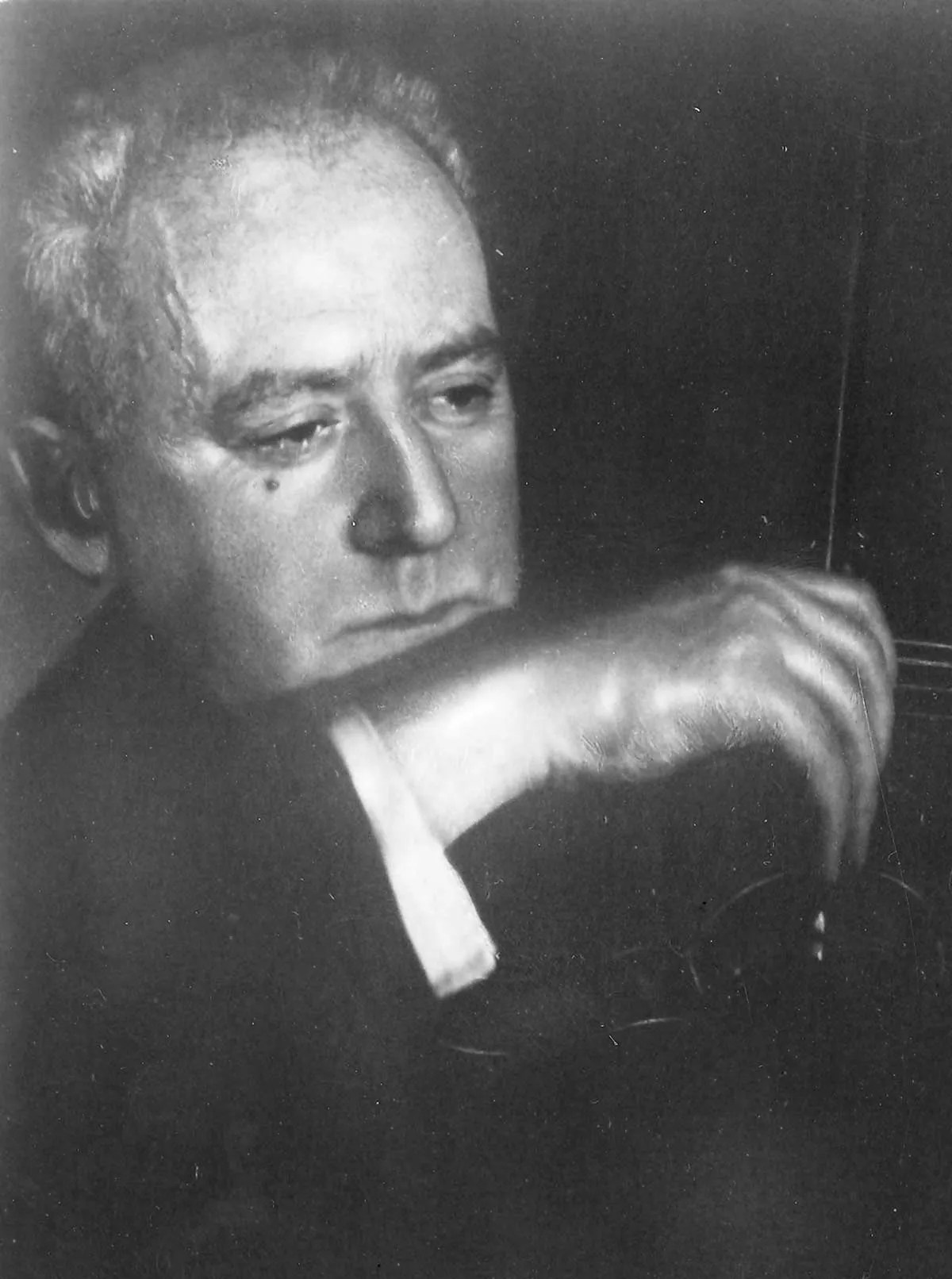
Mutter also noted that Flesch’s influence on the field of violin playing remains unmatched and groundbreaking even today.
“I, therefore, look upon myself as an artistic granddaughter of Carl Flesch, for even now, his work again and again provides inspiration and impetus for my own violinistic development. He pursued artistic perfection and reached his goal through complex and detailed analysis of all factors involved in violin playing,” wrote Mutter. “Thanks to his having created a well-organized written record of his insights, this knowledge is accessible to all. The fact that his writings, in spite of the complexity of the subject, do not deteriorate into a soulless mathematical treatise constitutes an outstanding accomplishment in itself on a par with his pedagogical telling examples illustrating methods of practicing. The greatness of his achievements lies in the depth of his insights.”
The book was initially well-received, no doubt in part due to the persistent marketing by both the well-resourced publisher Carl Fischer and the author himself as Flesch continued to promote the book throughout the rest of his life by offering master classes. His commitment paid off, as at his death in 1944, Flesch’s obituary stated “his book The Art of Violin Playing has been translated into 22 languages, including English, and is considered a standard textbook in many conservatories.” For years after his passing, newspapers continued to reference the two-volume set as an authoritative source in articles about popular violin players or repertoire. To this day, the book continues to be a part of the pedagogical canon.
Advertisement
“I would consider The Art of Violin Playing to be one of the most important general ‘treatises’ on violin playing,” writes violin pedagogue Tobiah Murphy in an email. “Throughout the history of violin playing, many teachers wrote treatises on the subject of technique and performance practice.”
Murphy, whose Murphy Music Academy channel on YouTube has over 2.5 million views and 37,000 subscribers, stressed the importance of Flesch’s work in one of his videos. “The level of thought and detail that he puts into solving what he could imagine as being just about every possible technical problem is something every teacher should aspire to, even if you don’t agree with every approach that he takes,” explains Murphy.
The Missouri native, who started his teaching studio in his apartment in 2018, also touches on why the book is still relevant today. “The reason Flesch’s [method] is so significant is due to its length and detail, as his treatise is much longer and [more] detailed than the ones by Leopold Mozart, Auer, and even Galamian. Yet it would still be impossible to write out everything Flesch knew about violin technique without producing several lengthy tomes,” writes Murphy. “Even with that limitation, he’s able to cover just about every major aspect of violin technique, in more than adequate detail and in language that is easy to read and understand. Of course, you would need a deeper study to truly understand everything Flesch writes about, but that is what teachers are for. And if you happen to be studying a particular technique, Flesch’s writings can greatly enhance your understanding of it.”
To keep its language fluent and contemporary, Flesch’s masterpiece has undergone two major English translations in its lifetime, ensuring the book remains a cornerstone in violin pedagogy. His critical insights into the deficiencies of 19th-century German violin teaching coupled with his meticulous approach to developing a scientific methodology for violin technique have left an indelible mark on the field. Through his teachings, writings, and the continued influence of his pedagogical lineage, Flesch’s legacy endures, guiding generations of violinists toward both technical mastery and artistic expression. His work stands as a testament to the power of thoughtful, analytical instruction in shaping the future of violin playing.
Advertisement


